

“50 Life-Changing Bible Verses About Helping Others: 7 Biblical Truths on Generosity”
God calls Christians to pour themselves out for others. But we often struggle with this part of our faith walk. We receive grace freely from Christ, yet sometimes we forget how to respond with that same generosity toward those around us.Scripture is filled with God’s command to His people. We are called to help others, care for the poor, imitate His generosity, and embrace self-sacrifice. This isn’t just a suggestion. It’s a holy calling that shapes who we are as believers.
In this comprehensive guide, you’ll discover Bible verses about helping others. These verses are organized into seven clear scriptural themes. Each theme reveals something important about biblical generosity and serving others. Whether you’re looking for guidance on caring for the weak or understanding the blessedness of giving, these verses will show you what God’s Word says about this essential part of Christian life. If you are interested to reading more Bible quotes then must visit our page.
Caring for the Weak and Vulnerable

God’s Heart for the Poor and Needy
God sees every person who struggles. The all-powerful Creator watches over each vulnerable soul on earth. Caring for the disadvantaged isn’t just a nice thing to do. It’s a priority that God has placed on the hearts of His people throughout all of Scripture.
One powerful way God shows His love for the weak is through us. He works through Christians to demonstrate compassion and mercy. When we help the needy, we become His hands and feet in the world. This calling echoes throughout the pages of Scripture, from the Old Testament laws to Jesus Christ’s teachings.
The poor, the widow, the fatherless, and the oppressed hold a special place in God’s heart. And because they matter to Him, they must matter to us.
Bible Verses About Helping the Poor and Weak
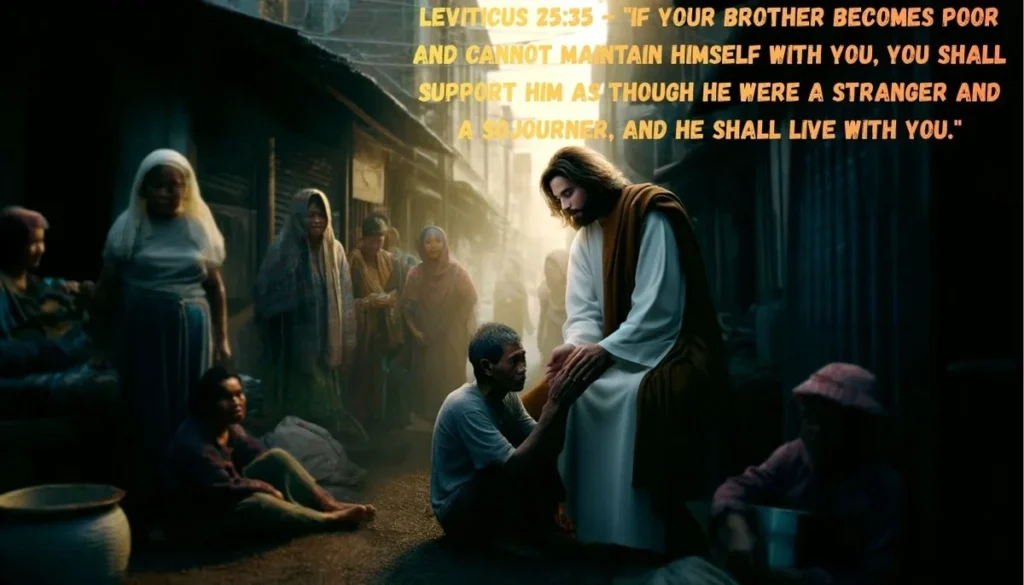
Leviticus 25:35 – “If your brother becomes poor and cannot maintain himself with you, you shall support him as though he were a stranger and a sojourner, and he shall live with you.”
Bible verses about helping others in this verse from Leviticus shows us that God commanded the Israelites to support those who fell into poverty. Notice the clear instruction: we are to help them live with dignity. This isn’t about handouts alone. It’s about restoring people to stability.
Deuteronomy 15:11 – “There will always be poor people in the land. Therefore I command you to be openhanded toward your fellow Israelites who are poor and needy in your land.”
God knew that poverty would always exist in this broken world. That’s why He commanded His people to stay openhanded. Generosity isn’t optional when the needy are always among us. This verse calls us to giving as a way of life, not just occasional charity.
Deuteronomy 24:19-21 – “When you are harvesting in your field and you overlook a sheaf, do not go back to get it. Leave it for the foreigner, the fatherless and the widow, so that the LORD your God may bless you in all the work of your hands.”
Here we see practical biblical generosity. The Israelites were told to leave part of their harvest for the poor. This wasn’t charity that made people beg. It allowed them to work and gather food with dignity. God built helping the poor right into their economic system.
Psalm 82:3-4 – “Defend the weak and the fatherless; uphold the cause of the poor and the oppressed. Rescue the weak and the needy; deliver them from the hand of the wicked.”
This psalm calls for justice and active intervention. Defending the weak means standing up when they face harm. It means using our voice and resources to protect those who cannot protect themselves. Righteousness demands action, not just sympathy.
Proverbs 14:31 – “Whoever oppresses the poor shows contempt for their Maker, but whoever is kind to the needy honors God.”
This is a sobering truth. How we treat the poor reflects how we view God Himself. When we show kindness to the needy, we honor the One who created them. Helping others becomes an act of worship.
Proverbs 29:7 – “The righteous care about justice for the poor, but the wicked have no such concern.”
The righteous person actively cares about justice. This verse draws a clear line between righteousness and wickedness. Indifference to the poor reveals something dark in the heart. True godliness shows itself through compassion.
Isaiah 25:4 – “For you have been a stronghold to the poor, a stronghold to the needy in his distress, a shelter from the storm and a shade from the heat; for the breath of the ruthless is like a storm against a wall.”
God Himself is described as a stronghold for the poor. He is their shelter, their shade, their protection. When we help the weak, we reflect this aspect of God’s character. We become instruments of His protective love.
Isaiah 58:10 – “If you pour yourself out for the hungry and satisfy the desire of the afflicted, then shall your light rise in the darkness and your gloom be as the noonday.”
Pouring yourself out for the hungry brings spiritual growth. Notice the promise: your light will rise in the darkness. Self-sacrifice for others transforms us. It lifts us out of our own struggles and brings blessing into our lives.
Matthew 10:8 – “Heal the sick, raise the dead, cleanse those who have leprosy, drive out demons. Freely you have received; freely give.”
Jesus Christ sent His disciples out with this command: freely give. Why? Because they had freely received from Him. This is the heart of Christian generosity. We give because God has given to us. Our service flows from grace received.
Luke 14:13-14 – “But when you give a banquet, invite the poor, the crippled, the lame, the blind, and you will be blessed. Although they cannot repay you, you will be repaid at the resurrection of the righteous.”
Jesus turned social customs upside down. Don’t just invite people who can pay you back. Invite those who have nothing to give in return. True generosity expects no earthly reward. The blessing comes from God, not from people.
Following Biblical Examples of Generosity
Learning from Generous Believers in Scripture
God doesn’t just command us to be generous. He also shows us how through real people in Scripture. These aren’t perfect people. They’re believers who chose compassion over comfort. They chose service over selfishness.
These Bible verses about helping others examples inspire us. They show us what faith looks like in action. When we read about Aaron, Hur, Tabitha, and others, we see that helping others isn’t complicated. It’s about seeing a need and responding with love.
Scripture Showing Acts of Generosity and Help
Exodus 17:12 – “When Moses’ hands grew tired, they took a stone and put it under him and he sat on it. Aaron and Hur held his hands up—one on one side, one on the other—so that his hands remained steady till sunset.”
Aaron and Hur saw Moses struggling. They didn’t wait to be asked. They found a solution and provided support. Sometimes helping others means literally holding them up when they’re too tired to continue. This is service at its most practical.
Ruth 2:8-9 – “So Boaz said to Ruth, ‘My daughter, listen to me. Don’t go and glean in another field and don’t go away from here. Stay here with the women who work for me. Watch the field where the men are harvesting, and follow along after the women. I have told the men not to lay a hand on you. And whenever you are thirsty, go and get a drink from the water jars the men have filled.'”
Boaz showed compassion to Ruth, a foreign widow with nothing. He provided protection, water, and opportunity. His generosity went beyond the minimum required by law. He created a safe space for the poor to work with dignity.
2 Kings 4:8-10 – “One day Elisha went to Shunem. And a well-to-do woman was there, who urged him to stay for a meal. So whenever he came by, he stopped there to eat. She said to her husband, ‘I know that this man who often comes our way is a holy man of God. Let’s make a small room on the roof and put in it a bed and a table, a chair and a lamp for him. Then he can stay there whenever he comes to us.'”
The Shunammite woman practiced hospitality in a beautiful way. She didn’t just offer a meal. She created a space where a man of God could rest regularly. Giving generously sometimes means long-term commitment, not just one-time charity.
Acts 9:36 – “Now there was in Joppa a disciple named Tabitha, which, translated, means Dorcas. She was full of good works and acts of charity.”
Tabitha (also called Dorcas) was known for her good works. This wasn’t occasional kindness. She was “full of” charity. Her entire life overflowed with helping others. This is the reputation every Christian should desire.
Acts 11:29 – “The disciples, as each one was able, determined to send relief to the brethren dwelling in Judea.”
The church collected resources according to what each person could give. Helping others doesn’t require wealth. It requires willing hearts that give from what they have. Notice the phrase “as each one was able.” God doesn’t demand what we don’t have.
2 Corinthians 8:1-5 – “And now, brothers and sisters, we want you to know about the grace that God has given the Macedonian churches. In the most severe trial, their overflowing joy and their extreme poverty welled up in rich generosity.
For I testify that they gave as much as they were able, and even beyond their ability. Entirely on their own, they urgently pleaded with us for the privilege of sharing in this service to the Lord’s people. And they exceeded our expectations: They gave themselves first of all to the Lord, and then by the will of God also to us.”
The Macedonian believers gave despite their own extreme poverty. They saw giving as a privilege, not a burden. This is generosity at its finest. When we give ourselves to the Lord first, helping others becomes natural.
Philemon 1:7 – “Your love has given me great joy and encouragement, because you, brother, have refreshed the hearts of the Lord’s people.”
Philemon’s love in action refreshed tired saints. Sometimes helping others means providing emotional and spiritual rest. Not all ministry involves money. Sometimes it’s about being encouraging and renewing people’s spirits.
The Blessedness and Rewards of Giving

Why Helping Others Brings More Blessing Than Receiving
“It is more blessed to give than to receive.” This truth from Acts 20:35 echoes through every culture. Even people outside the church recognize its wisdom. But why is this true?
When God stirs our hearts to give and we obey, something changes in us. We experience satisfaction that no purchase can provide. We become more like Jesus Christ, who gave Himself completely for us. Giving generously transforms the giver as much as it helps the receiver.
Bible verses about helping others of Generosity
Proverbs 11:25 – “Whoever brings blessing will be enriched, and one who waters will himself be watered.”
This is God’s promise to the generous. When you bless others, you receive blessing in return. When you water others with kindness, God waters you. Generosity creates a cycle of blessing that enriches everyone involved.
Proverbs 19:17 – “Whoever is kind to the poor lends to the LORD, and he will reward them for what they have done.”
Think about this: kindness to the poor is like lending to God Himself. He takes personal responsibility for repaying that kindness. You cannot out-give God. Every act of charity is seen and will be rewarded.
Proverbs 22:9 – “The generous will themselves be blessed, for they share their food with the poor.”
The generous person receives blessing. This isn’t about getting rich through giving. It’s about the deep satisfaction and spiritual blessings that come from sharing with those who have less.
Matthew 25:34-40 – “Then the King will say to those on his right, ‘Come, you who are blessed by my Father; take your inheritance, the kingdom prepared for you since the creation of the world. For I was hungry and you gave me something to eat, I was thirsty and you gave me something to drink, I was a stranger and you invited me in, I needed clothes and you clothed me, I was sick and you looked after me, I was in prison and you came to visit me.
‘ Then the righteous will answer him, ‘Lord, when did we see you hungry and feed you, or thirsty and give you something to drink? When did we see you a stranger and invite you in, or needing clothes and clothe you? When did we see you sick or in prison and go to visit you?’ The King will reply, ‘Truly I tell you, whatever you did for one of the least of these brothers and sisters of mine, you did for me.'”
Jesus Christ makes this stunning claim: when we help the needy, we help Him. Feeding the hungry, clothing the poor, visiting the sick—these aren’t just good deeds. They’re ministry to Christ Himself. This elevates every act of service to something sacred.
Matthew 25:44-45 – “They also will answer, ‘Lord, when did we see you hungry or thirsty or a stranger or needing clothes or sick or in prison, and did not help you?’ He will reply, ‘Truly I tell you, whatever you did not do for one of the least of these, you did not do for me.'”
The flip side is equally powerful. Neglecting the poor means neglecting Christ. Indifference to suffering has eternal consequences. The righteous and the wicked are separated by how they responded to the least of these.
Mark 10:21 – “And Jesus, looking at him, loved him, and said to him, ‘You lack one thing: go, sell all that you have and give to the poor, and you will have treasure in heaven; and come, follow me.'”
Jesus offered the rich young ruler something better than earthly wealth: treasure in heaven. Giving to the poor stores up eternal riches. Everything we keep here rusts and fades. Everything we invest in God’s kingdom lasts forever.
Luke 3:10-11 – “‘What should we do then?’ the crowd asked. John answered, ‘Anyone who has two shirts should share with the one who has none, and anyone who has food should do the same.'”
John the Baptist made generosity simple and practical. If you have two, share one. This isn’t complicated theology. It’s basic Christian service. Sharing what we have is the natural response to God’s grace.
Luke 6:38 – “Give, and it will be given to you. A good measure, pressed down, shaken together and running over, will be poured into your lap. For with the measure you use, it will be measured to you.”
God promises abundant return for generous giving. Notice the description: pressed down, shaken together, running over. God doesn’t give back grudgingly. He pours out blessing in overwhelming measure. The size of your giving determines the size of your receiving.
Luke 12:33-34 – “Sell your possessions and give to the poor. Provide purses for yourselves that will not wear out, a treasure in heaven that will never fail, where no thief comes near and no moth destroys. For where your treasure is, there your heart will be also.”
Jesus connects our treasure to our heart. Where you invest your resources reveals what you truly value. Giving to the poor moves your heart toward heaven. It shifts your focus from temporary things to eternal realities.
Acts 20:35 – “In all things I have shown you that by working hard in this way we must help the weak and remember the words of the Lord Jesus, how he himself said, ‘It is more blessed to give than to receive.'”
Paul reminded the church of Jesus’s own words. Working hard so we can help the weak is blessed work. Giving brings more joy than receiving. This truth transforms how we view our jobs and resources.
2 Corinthians 9:6-7 – “Remember this: Whoever sows sparingly will also reap sparingly, and whoever sows generously will also reap generously. Each of you should give what you have decided in your heart to give, not reluctantly or under compulsion, for God loves a cheerful giver.”
Generous sowing produces generous reaping. But notice the attitude matters. God loves a cheerful giver. Giving under pressure or with resentment misses the point. True generosity flows from a joyful heart.
Galatians 6:9 – “And let us not grow weary of doing good, for in due season we will reap, if we do not give up.”
Helping others requires endurance. We can get tired of doing good. But God promises a harvest if we don’t quit. The blessing may not come immediately, but it will come. Keep serving, keep giving, keep loving.
Loving to Do What is Right and Just
Growing in Love for Righteousness Through Helping Others
God loves teaching us to love good works. Each act of service draws us closer to Him. Each time we help a neighbor in need, we reflect God’s character more clearly. This is how spiritual growth happens—through consistent obedience in serving others.
Seeking justice and correcting oppression become natural desires for the righteous. What once felt like duty transforms into delight. This is what God does in hearts surrendered to Him.
Scriptures on Righteousness and Helping Your Neighbor
Psalm 37:21 – “The wicked borrow and do not repay, but the righteous give generously.”
This psalm contrasts the wicked with the righteous. Righteousness shows itself through generous giving. The righteous person is known by their willingness to share and their integrity in financial matters.
Psalm 112:5 – “Good will come to those who are generous and lend freely, who conduct their affairs with justice.”
Generosity and justice walk together. Those who lend freely and act justly will see good come to them. God honors those who handle their resources with righteousness and mercy.
Isaiah 1:17 – “Learn to do good; seek justice, correct oppression; bring justice to the fatherless, plead the widow’s cause.”
This verse gives us a to-do list for righteousness. Learn good. Seek justice. Correct oppression. Defend the fatherless and the widow. These aren’t passive activities. They require active engagement with the suffering around us.
Micah 6:8 – “He has shown you, O mortal, what is good. And what does the LORD require of you? To act justly and to love mercy and to walk humbly with your God.”
This is one of the most famous verses about what God requires. Justice, mercy, and humility form the foundation of righteous living. Helping others flows naturally from these three qualities.
Zechariah 7:9-10 – “This is what the LORD Almighty said: ‘Administer true justice; show mercy and compassion to one another. Do not oppress the widow or the fatherless, the foreigner or the poor. Do not plot evil against each other.'”
God through the prophet Zechariah lists both what to do and what not to do. Show justice, mercy, and compassion. Don’t oppress the vulnerable. Don’t plot harm. Righteousness includes both positive action and refusing evil.
Matthew 22:39 – “And the second is like it: ‘Love your neighbor as yourself.'”
Jesus summarized the entire law with two commands. The second: love your neighbor as yourself. Every act of helping others fulfills this command. When we care for others with the same concern we have for ourselves, we live out God’s will.
Luke 10:27-37 – “And he answered, ‘You shall love the Lord your God with all your heart and with all your soul and with all your strength and with all your mind, and your neighbor as yourself.’ And he said to him, ‘You have answered correctly; do this, and you will live.’ But he, desiring to justify himself, said to Jesus, ‘And who is my neighbor?’ Jesus replied, ‘A man was going down from Jerusalem to Jericho, and he fell among robbers, who stripped him and beat him and departed, leaving him half dead.
Now by chance a priest was going down that road, and when he saw him he passed by on the other side. So likewise a Levite, when he came to the place and saw him, passed by on the other side. But a Samaritan, as he journeyed, came to where he was, and when he saw him, he had compassion. He went to him and bound up his wounds, pouring on oil and wine. Then he set him on his own animal and brought him to an inn and took care of him.
And the next day he took out two denarii and gave them to the innkeeper, saying, “Take care of him, and whatever more you spend, I will repay you when I come back.” Which of these three, do you think, proved to be a neighbor to the man who fell among the robbers?’ He said, ‘The one who showed him mercy.’ And Jesus said to him, ‘You go, and do likewise.'”
The parable of the Good Samaritan is perhaps the most famous story about helping others. The priest and the Levite saw the wounded man but passed by. The Samaritan—despised by Jews—stopped and showed compassion.
Jesus ended with a command: “You go, and do likewise.” We are all called to be the Samaritan. We are all called to show mercy regardless of who needs help.
Romans 13:10 – “Love does no harm to a neighbor. Therefore love is the fulfillment of the law.”
Love that doesn’t harm is the fulfillment of all God’s law. Helping your neighbor instead of harming them is what righteousness looks like in daily life. Every act of kindness fulfills what God requires.
Imitating God’s Generous and Helpful Nature

God as Our Ultimate Helper and Model
God Himself is our Helper. When Moses named his son Eliezer, the name meant “God is my helper.” This theme runs through all of Scripture. Our God doesn’t stand distant from human need. He engages with it. He responds to it. He helps.
Jesus Christ is our supreme example. He left heaven’s glory to serve humanity. He became poor so we could become rich in grace. Every good gift flows from our Father’s hand. When we give, we simply pass along what He has already given us.
Bible Verses About Following God’s Example of Generosity
Psalm 54:4 – “Surely God is my helper; the Lord is the one who sustains me.”
The psalmist declares God as helper and sustainer. God doesn’t just create and abandon. He actively helps His people. He sustains them through every trial. This is the God we serve and imitate.
Matthew 5:16 – “In the same way, let your light shine before others, that they may see your good deeds and glorify your Father in heaven.”
Our good deeds should point people to God. When we help others, we shine light into darkness. People should see our service and think, “That’s what God is like.” Our generosity becomes a witness to God’s character.
Matthew 5:44-45 – “But I tell you, love your enemies and pray for those who persecute you, that you may be children of your Father in heaven. He causes his sun to rise on the evil and the good, and sends rain on the righteous and the unrighteous.”
God shows kindness to everyone, even His enemies. He makes the sun rise on the wicked and the righteous alike. If we want to be His children, we must show the same indiscriminate love. Helping others can’t be limited to people we like.
John 3:17 – “For God did not send his Son into the world to condemn the world, but in order that the world might be saved through him.”
God’s primary motivation was salvation, not condemnation. Jesus Christ came to help, not to judge. This is the heart we should carry toward the needy and lost around us. We come to save and serve, not to condemn.
John 15:12 – “My command is this: Love each other as I have loved you.”
Jesus gives us both a command and a standard. Love each other. But not just any love—love as Christ loved us. He loved sacrificially. He loved to the point of death. Our love for others should cost us something.
2 Corinthians 8:9 – “For you know the grace of our Lord Jesus Christ, that though he was rich, yet for your sake he became poor, so that you by his poverty might become rich.”
Christ became poor so we could become rich in grace. This is the ultimate example of self-sacrifice. He gave up everything to give us everything. How can we not respond with generosity toward others?
Ephesians 5:1-2 – “Follow God’s example, therefore, as dearly loved children and walk in the way of love, just as Christ loved us and gave himself up for us as a fragrant offering and sacrifice to God.”
Imitate God. Walk in love. Christ gave Himself as a sacrifice. This is our model. Helping others through self-sacrifice is the fragrance that pleases God.
James 1:5 – “If any of you lacks wisdom, let him ask God, who gives generously to all without reproach, and it will be given him.”
God gives generously. Notice He doesn’t hold back or criticize when we ask. He pours out wisdom freely. This is the same spirit we should have when helping others. Give without reproach or judgment.
James 1:17 – “Every good and perfect gift is from above, coming down from the Father of the heavenly lights, who does not change like shifting shadows.”
Every good gift comes from God. He is the source of all generosity. When we give to others, we’re simply channeling what flows from Him. We are conduits of His blessing.
1 John 3:16 – “This is how we know what love is: Jesus Christ laid down his life for us. And we ought to lay down our lives for our brothers and sisters.”
Christ laid down His life. We should lay down ours. This doesn’t always mean physical death. It means daily self-sacrifice. It means putting others’ needs before our comfort. This is love in action.
1 John 4:19-20 – “We love because he first loved us. Whoever claims to love God yet hates a brother or sister is a liar. For whoever does not love their brother and sister, whom they have seen, cannot love God, whom they have not seen.”
Our love for others flows from God’s love for us. We can’t claim to love God while hating people. Loving your neighbor is inseparable from loving God. Helping others proves our love for God is real.
The Holiness of Helping Others
How Generosity Sets Christians Apart
Helping others isn’t just a good thing to do. It’s a holy thing to do. This means God uses service to set His church apart from the world. Christians are meant to be different. We refuse to live selfish lives in a self-centered culture.
God created us in Christ Jesus for good works. Before the foundation of the world, He prepared specific acts of service for each of us. Walking in holiness means walking in the good works He designed for us.
Scripture on the Sacred Act of Serving Others
Matthew 5:42 – “Give to the one who asks you, and do not turn away from the one who wants to borrow from you.”
Jesus calls us to radical generosity. When someone asks, give. When someone wants to borrow, don’t turn away. This challenges our natural instinct to protect our resources. But holiness requires a different response.
Matthew 25:35-36 – “For I was hungry and you gave me something to eat, I was thirsty and you gave me something to drink, I was a stranger and you invited me in, I needed clothes and you clothed me, I was sick and you looked after me, I was in prison and you came to visit me.”
Jesus lists specific ways we can serve: feeding the hungry, giving drink to the thirsty, welcoming strangers, clothing the poor, comforting the sick, visiting prisoners. These concrete actions make holiness practical and measurable.
Luke 6:30 – “Give to everyone who begs from you, and from one who takes away your goods do not demand them back.”
This is radical teaching. Give to everyone who begs. Don’t demand your goods back when taken. Jesus pushes us beyond comfortable generosity into self-sacrifice that trusts God completely.
John 13:14-15 – “Now that I, your Lord and Teacher, have washed your feet, you also should wash one another’s feet. I have set you an example that you should do as I have done for you.”
Jesus washed His disciples’ feet—a task reserved for the lowest servant. Then He told them to do the same. Holiness includes humility. Serving others means taking the lowest place, not seeking honor.
John 15:13 – “Greater love has no one than this: to lay down one’s life for one’s friends.”
The greatest love involves laying down your life. This is the pinnacle of self-sacrifice. While few are called to literal martyrdom, all are called to daily death to selfishness. Every act of service is a small death to our own desires.
Romans 12:10 – “Love one another with brotherly affection. Outdo one another in showing honor.”
Paul challenges believers to compete in love. Try to outdo each other in showing honor. This is the only competition God approves—a race to see who can serve and honor others most.
Romans 12:13 – “Share with the Lord’s people who are in need. Practice hospitality.”
Sharing and hospitality aren’t optional extras. They’re commands. Notice these are present-tense actions. Keep sharing. Keep practicing hospitality. Holy living includes ongoing generosity.
Romans 12:20 – “If your enemy is hungry, feed him; if he is thirsty, give him something to drink; for by so doing you will heap burning coals on his head.”
Helping your enemy is particularly holy work. Feeding and giving drink to those who oppose you goes against every human instinct. But this is exactly what Christ did. He died for His enemies.
Romans 15:1 – “We who are strong ought to bear with the failings of the weak and not to please ourselves.”
Strength comes with responsibility. Those who are strong must bear with the failings of the weak. This isn’t about feeling superior. It’s about using your strength to help others stand. Holiness means not living to please yourself.
Galatians 2:10 – “Only, they asked us to remember the poor, the very thing I was eager to do.”
Paul was eager to remember the poor. This wasn’t a burden to him. It was a joy. When helping the poor becomes something we’re eager to do, we know our hearts are being transformed into holiness.
Galatians 6:2 – “Carry each other’s burdens, and in this way you will fulfill the law of Christ.”
Carrying each other’s burdens fulfills the law of Christ. This is what Jesus requires of His followers. When someone struggles under a heavy load, we step in. We help. We share the weight. This is love in action.
Ephesians 2:10 – “For we are his workmanship, created in Christ Jesus for good works, which God prepared beforehand, that we should walk in them.”
You were created for good works. God prepared specific acts of service for you before you were born. Helping others isn’t just something nice to add to your life. It’s part of why you exist. Walking in these good works is walking in your purpose.
Philippians 2:3-4 – “Do nothing out of selfish ambition or vain conceit. Rather, in humility value others above yourselves, not looking to your own interests but each of you to the interests of the others.”
Selfishness has no place in holy living. Instead, humility should mark every action. Value others above yourself. Look to their interests, not just your own. This is the mindset that makes helping others natural.
1 Thessalonians 5:11 – “Therefore encourage one another and build one another up, just as you are doing.”
Encouraging and building up others is holy work. Sometimes helping doesn’t involve money or physical resources. Sometimes it’s words that lift a weary spirit. Ministry to the soul is just as important as ministry to the body.
Hebrews 6:10 – “God is not unjust; he will not forget your work and the love you have shown him as you have helped his people and continue to help them.”
God sees every act of service. He will not forget your work and love. When you help His people, He takes note. The reward may not come immediately, but it will come. Your labor in helping others is never wasted.
Hebrews 13:16 – “And do not forget to do good and to share with others, for with such sacrifices God is pleased.”
Doing good and sharing are sacrifices that please God. They cost us something—time, money, energy, comfort. But these sacrifices are fragrant offerings to God. They bring Him joy.
1 Peter 4:10 – “Each of you should use whatever gift you have received to serve others, as faithful stewards of God’s grace in its various forms.”
Every gift you have received should be used to serve others. You’re a steward of God’s grace. The talents, resources, and opportunities you have aren’t just for your benefit. They’re tools for helping those around you.
The Wickedness of Selfishness and Neglect
Biblical Warnings Against Failing to Help Others
Scripture doesn’t just praise generosity. It also warns against its opposite: selfishness and neglect. This is the darker side of the truth. While giving brings blessing, refusing to help brings consequences.
Faith without deeds is dead, according to James. You can’t claim to love God while ignoring the suffering around you. Selfishness consumes those who embrace it. It hardens the heart and separates us from God’s will.
Bible Verses Warning Against Selfishness

Proverbs 3:27 – “Do not withhold good from those to whom it is due, when it is in your power to act.”
When you have the power to do good, you must do it. Withholding help when you can give it is wrong. God holds us accountable for the opportunities we ignore. Neglect is a sin of omission.
Proverbs 21:13 – “Whoever closes his ear to the cry of the poor will himself call out and not be answered.”
This is a sobering warning. If you ignore the cry of the poor, God may ignore your cry when you need help. Compassion creates connection with God. Indifference creates distance.
Proverbs 28:27 – “Those who give to the poor will lack nothing, but those who close their eyes to them receive many curses.”
Giving to the poor leads to abundance. Closing your eyes to them brings curses. This isn’t just about money. It’s about the blessing or curse that follows our choices regarding the needy.
Ezekiel 16:49 – “Now this was the sin of your sister Sodom: She and her daughters were arrogant, overfed and unconcerned; they did not help the poor and needy.”
Sodom’s sin wasn’t just sexual immorality. They were arrogant, overfed, and unconcerned. They refused to help the poor and needy. Their selfishness and neglect contributed to their judgment. This should make us examine our own hearts.
Matthew 25:41-43 – “Then he will say to those on his left, ‘Depart from me, you who are cursed, into the eternal fire prepared for the devil and his angels. For I was hungry and you gave me nothing to eat, I was thirsty and you gave me nothing to drink, I was a stranger and you did not invite me in, I needed clothes and you did not clothe me, I was sick and in prison and you did not look after me.'”
Jesus speaks of eternal separation for those who neglect the needy. This is one of the most serious passages in Scripture. Failing to help has eternal consequences. The wicked are identified by their indifference to suffering.
Luke 16:19-21 – “There was a rich man who was dressed in purple and fine linen and lived in luxury every day. At his gate was laid a beggar named Lazarus, covered with sores and longing to eat what fell from the rich man’s table. Even the dogs came and licked his sores.”
The parable of the rich man and Lazarus shows the danger of selfish living. The rich man had everything while Lazarus had nothing. The rich man could have helped but didn’t. This neglect led to his torment. Selfishness in this life has consequences in the next.
Ephesians 4:28 – “Anyone who has been stealing must steal no longer, but must work, doing something useful with their own hands, that they may have something to share with those in need.”
Even former thieves should work so they can share with those in need. The goal of honest work isn’t just personal comfort. It’s to have resources for helping others. God redeems us from selfishness to generosity.
Philippians 2:3-4 – “Do nothing out of selfish ambition or vain conceit. Rather, in humility value others above yourselves, not looking to your own interests but each of you to the interests of the others.”
Selfish ambition and vain conceit are explicitly condemned. Humility requires looking to others’ interests. Christians are called to something completely opposite from the self-centered culture around us.
2 Thessalonians 3:10 – “For even when we were with you, we would give you this command: If anyone is not willing to work, let him not eat.”
This verse addresses a different kind of selfishness—refusing to work while expecting others to provide. God calls us to productive lives. Those who can work should work. This protects charity for those who truly cannot provide for themselves.
1 Timothy 5:8 – “But if anyone does not provide for his relatives, and especially for members of his household, he has denied the faith and is worse than an unbeliever.”
Failing to provide for family is serious. It’s described as denying the faith and being worse than an unbeliever. Helping must start at home. Our first responsibility is to those God has placed closest to us.
1 Timothy 6:17-19 – “Command those who are rich in this present world not to be arrogant nor to put their hope in wealth, which is so uncertain, but to put their hope in God, who richly provides us with everything for our enjoyment. Command them to do good, to be rich in good deeds, and to be generous and willing to share. In this way they will lay up treasure for themselves as a firm foundation for the coming age, so that they may take hold of the life that is truly life.”
The wealthy face special temptation toward arrogance and trust in riches. But God commands them to be rich in good deeds. Generosity and willingness to share create treasure that lasts. This is “the life that is truly life.”
James 2:14-17 – “What good is it, my brothers and sisters, if someone claims to have faith but has no deeds? Can such faith save them? Suppose a brother or a sister is without clothes and daily food. If one of you says to them, ‘Go in peace; keep warm and well fed,’ but does nothing about their physical needs, what good is it? In the same way, faith by itself, if it is not accompanied by action, is dead.”
James asks the piercing question: what good is faith without deeds? If you see someone without clothes or food and only offer words, your faith is dead. Real faith produces action. Real love meets practical needs. Words without works mean nothing.
1 John 3:17 – “If anyone has material possessions and sees a brother or sister in need but has no pity on them, how can the love of God be in that person?”
This is a diagnostic question. If you have resources and see someone in need but feel no compassion, something is wrong. God’s love in a person naturally produces pity and action. Indifference to suffering reveals an absence of God’s love.
Practical Ways to Apply These Bible Verses About Helping Others
Living Out Biblical Generosity in Modern America
The key is to create practical opportunities for service. God has placed you in a specific location with specific resources for a reason. Your job, your home, your skills, and your financial situation are all tools God can use.
Helping others doesn’t require perfection. It requires faithfulness. Start where you are with what you have. Every act of kindness, no matter how small, reflects Christ’s love to a broken world.
Actionable Steps for Helping Others
Support local food banks and homeless shelters. These organizations serve the poor and the hungry daily. Your donations of food, money, or time meet immediate physical needs in your community. If you are interested to reading Lent Bible Verses then must visit our page.
Volunteer at churches and community organizations. Many ministries need volunteers for various acts of service. Tutoring programs, meal services, clothing closets, and visitation ministries all need willing hands.Practice hospitality by opening your home. Invite people for meals. Offer your guest room to those in need. Hospitality is a powerful form of Christian service that creates deep connections.
Give financially to missions and ministry. Support those who dedicate their lives to serving others. Your generous giving enables ministry around the world and in your local area. If you are interested to reading Perseverance Bible Verses to Help You Never Give Up then must visit our page.
Conclusion
We’ve explored Bible verses about helping others across seven powerful themes. From caring for the weak to warnings against selfishness, Scripture is saturated with God’s command to serve.Helping others isn’t optional for Christians. It’s a holy calling woven throughout God’s Word. When we care for the poor, show compassion to the needy, and practice generosity, we reflect God’s character to the world.
The most crucial way we can help others is by proclaiming the gospel. Physical needs are temporary, but spiritual needs are eternal. As you grow in serving others, never forget to share the good news of Jesus Christ.Whatever your calling, start today. Don’t wait until you have more money or more time. Freely you have received; freely give. Every act of service, no matter how small, matters to God and impacts eternity.
Helping others is how we live out our faith. It’s how we show the world what God is like. It’s how we fulfill the law of Christ and walk in the good works prepared for us.Helping others is how we live out our faith. It’s how we show the world what God is like. It’s how we fulfill the law of Christ and walk in the good works prepared for us.